Standard Age Minimums Across Commercial Fields
Most commercial paintball facilities in the United States set their baseline minimum age at ten or twelve years old for traditional .68 caliber play. This threshold is rarely arbitrary; it is primarily driven by commercial liability insurance policies, equipment sizing, and physical maturity. While individual state laws occasionally weigh in on projectile sports, private park regulations almost always dictate the actual operating requirements. Before booking any group outing, organizers should verify the specific venue policy, as a few rural parks permit players as young as eight with strict parental supervision.
The primary safety consideration behind these age restrictions involves the physical demands of standard equipment. Full-sized paintball markers with an aluminum high-pressure air tank and a gravity hopper can weigh between four and six pounds, which quickly exhausts smaller arms during extended games. More importantly, protective thermal goggle systems must fit securely around the temple and jawline without shifting when running. If a child’s facial structure is too small, gaps can form between the foam seal and skin, creating an unacceptable risk of eye injury from stray paint fragments.
Legal waivers represent another critical requirement for youth participants across all fifty states. Every minor under eighteen years of age must have an adult waiver signed by their own parent or legal guardian before stepping onto the staging area. Field operators cannot legally accept permission notes from friends' parents or team coaches. Leading parks now utilize online waiver systems, allowing coordinators to email digital forms to parents days in advance, preventing logistical bottlenecks at the registration counter on game morning.
Low-Impact Alternatives for Pre-Teens and Younger Players
For children who fall below the standard ten-year-old threshold, many modern parks offer low-impact paintball utilizing .50 caliber paintballs. These smaller pellets carry roughly one-third of the kinetic impact energy of conventional .68 caliber rounds when fired at field-regulated velocities. As a result, hits register with a mild snap rather than an uncomfortable sting, making the format far more approachable for cautious beginners, school clubs, and family groups with mixed age ranges. The markers are also noticeably lighter, often constructed from durable composite polymers that reduce arm fatigue.
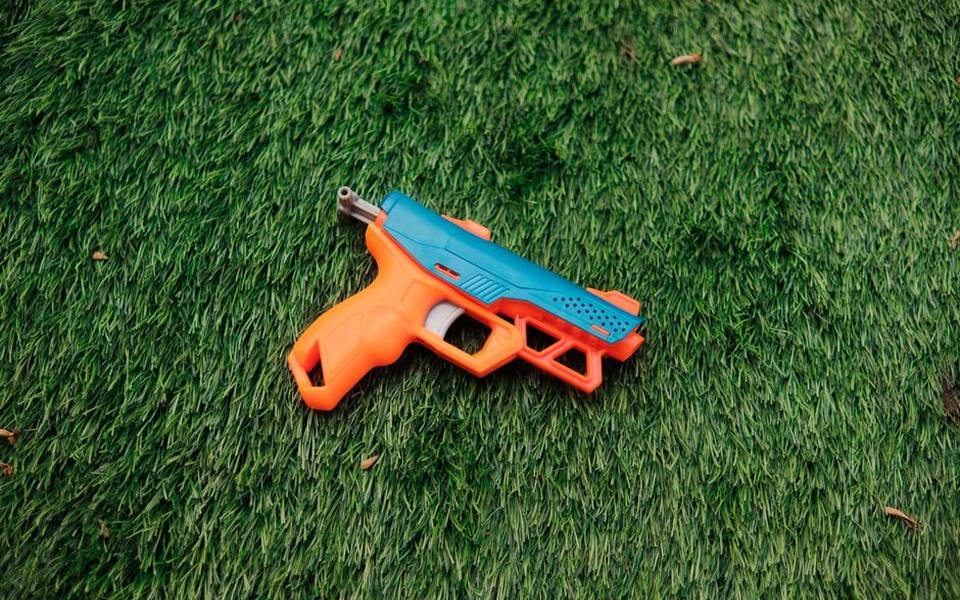
Another popular entry point for young kids between ages six and nine is spring-powered pump play, commonly known under system names like SplatMaster. These markers fire lightweight paintballs using manual spring tension rather than compressed air or carbon dioxide tanks, capping velocities well below regular recreational limits. Because these games require manual cocking between shots, the rate of fire remains controlled, eliminating chaotic spray and keeping matches orderly. Players still wear full eye and face protection, teaching young participants proper safety discipline from their first session.
Families planning youth parties frequently seek out venues that maintain dedicated staging zones and private referees for low-impact formats. When researching party packages at local venues, organizers should confirm whether rental pricing includes low-impact gear, chest protectors, and unlimited air fills. Having a dedicated field referee for younger groups ensures that rules regarding barrel plugs and mask retention are continually enforced without competing for attention against more aggressive walk-on players.
Indoor Nerf Arenas and Birthday Party Formats
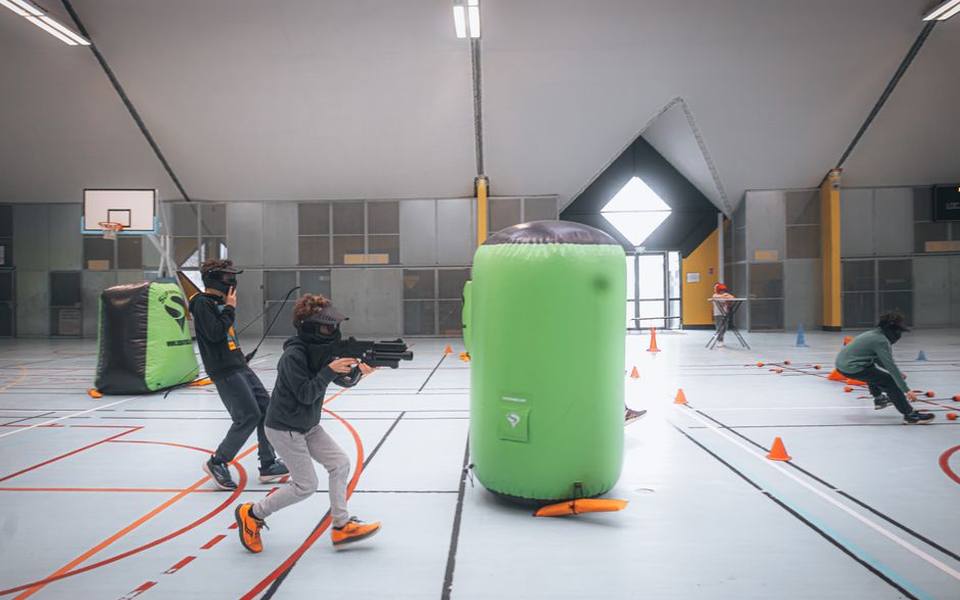
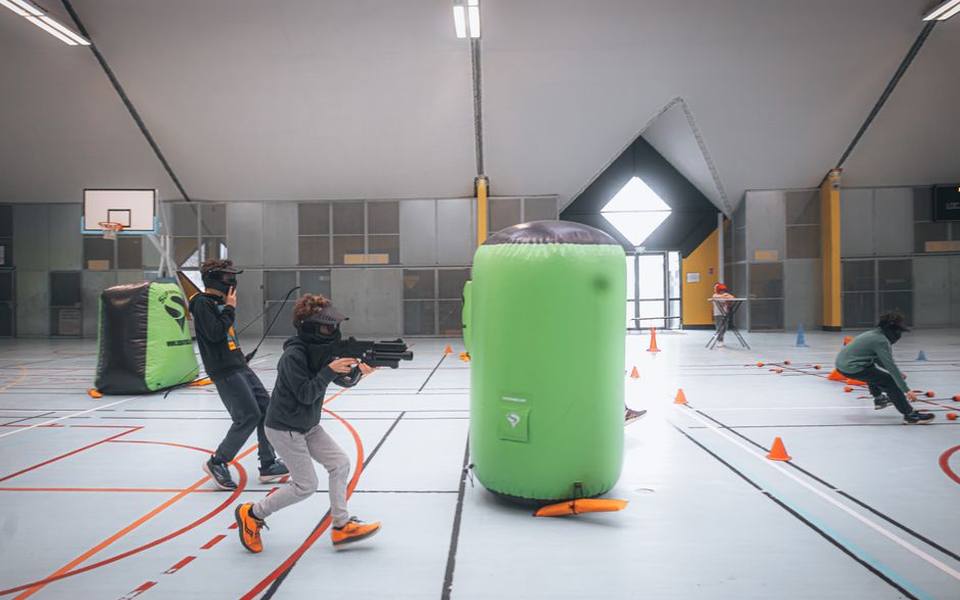
When younger children want the excitement of tactical team play without the mess or sting of paint, indoor foam dart arenas offer an excellent alternative. Inspired by concepts like tag ops tactical arenas, these facilities feature custom inflatable barriers, blacklight corridors, and upbeat music tailored to youth birthday celebrations. The minimum age for structured foam dart battles typically drops to five or six years old, opening up active group combat games to early elementary school kids who are not yet ready for paintball markers.
Structured birthday sessions at foam arenas operate with organized round rotations managed by dedicated field marshals. Referees run classic scenarios such as team elimination, capture the flag, and protect the team captain using standard foam dart blasters. The controlled indoor environment eliminates weather disruptions, while pre-installed rubberized flooring or turf prevents skinned knees. Additionally, facilities provide hundreds of communal foam darts, sparing parents the chore of picking up spent ammunition across a giant room after every round.
These foam dart arenas also serve as an effective training ground for tactical communication and sportsmanship. Young players learn the fundamentals of spatial awareness, taking cover behind barricades, and calling themselves out when tagged by an opponent's dart. By mastering these habits early in a zero-impact setting, children build the confidence and discipline required to transition smoothly into low-impact paintball and traditional scenario games as they grow older.
Bubble Ball and Active Corporate Outing Alternatives
Bubble ball, also known as bubble soccer or knockerball, has become an exceptionally popular attraction for adult corporate outings and casual weekend groups. In this format, participants wear large, transparent, inflatable spheres made of heavy-duty PVC or TPU that cover the upper body from head to mid-thigh, leaving the legs free to sprint. Players bump, roll, and knock into one another while attempting to kick a soccer ball into the opposing net. Because the thick air cushion absorbs collision force, adults can engage in full-contact physical play with minimal risk of injury.
From an event organizer's perspective, bubble ball serves as an outstanding icebreaker for corporate gatherings because it completely levels the athletic playing field. Physical skill and soccer technique matter far less than balance, momentum, and enthusiasm inside an inflatable sphere. Colleagues of varied organizational ranks find themselves laughing as they bounce harmlessly across the grass, stripping away traditional workplace formalities and encouraging genuine peer interaction in a lighthearted, competitive setting.
Many outdoor adventure parks and recreational facilities now offer bubble ball as an add-on alongside tactical shooting sports. A company can spend the morning coordinating strategy on the woodsball course, break for lunch under a covered pavilion, and spend the afternoon playing bubble ball tournaments on an open lawn. Checking with your venue ahead of time allows the staff to inflate the suits, groom the grass surface, and assign dedicated field coordinators to manage substitutions and safety checks.
Selecting Venues and Planning Corporate Team Outings
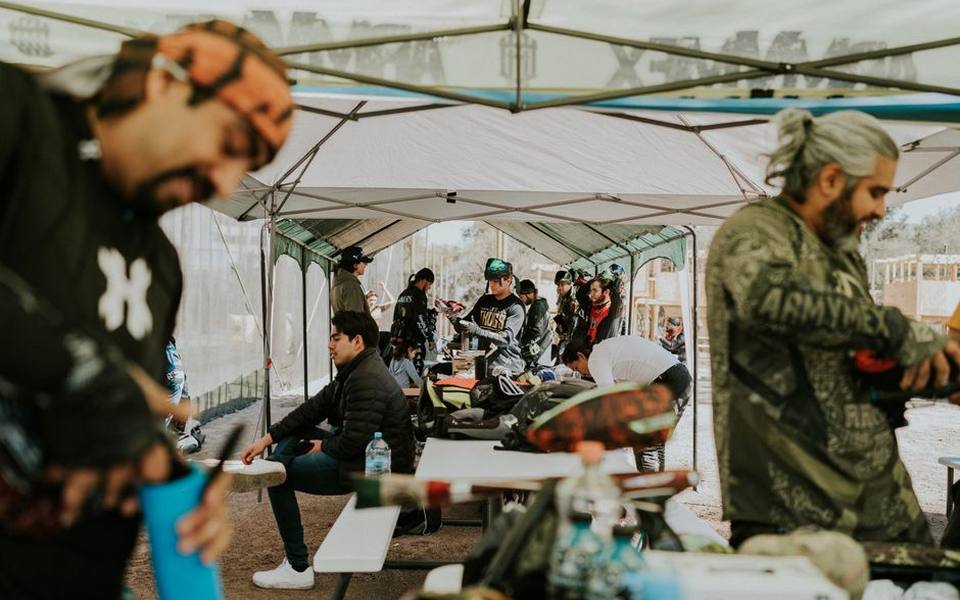
Choosing the right venue for a corporate outing requires evaluating infrastructure well beyond the playing fields themselves. A high-performing corporate team-building site must offer comfortable staging zones, covered or air-conditioned seating, clean modern restrooms, and adequate space for off-field catering or company presentations. High-stress office environments benefit most from an outing that feels organized and hospitable, rather than an unshaded gravel lot with portable toilets. Professional facilities frequently provide private cabanas or party tents specifically set aside for business groups.
Planners must decide whether to coordinate directly with field event coordinators or partner with an independent corporate events agency. Specialized event planning firms often bundle venue rental with catered lunch, professional photography, customized team shirts, and structured debriefing workshops led by leadership facilitators. However, working directly with established park management can save significant budget while still providing access to private fields and dedicated safety staff who will tailor game rules to match your company's physical capabilities and comfort levels.
Inclusivity should remain central when designing any corporate event agenda. Not every employee wants to take a paintball hit, and forcing participation can damage morale rather than improve it. Thoughtful planners offer a spectrum of involvement, such as pairing low-impact or target-shooting stations with traditional play, or offering bubble soccer alongside comfortable spectator zones. Giving team members the freedom to participate as photographers, flag runners, or field marshals ensures that everyone feels valued regardless of their athletic comfort.
Essential Tactical Movements and Field Positioning
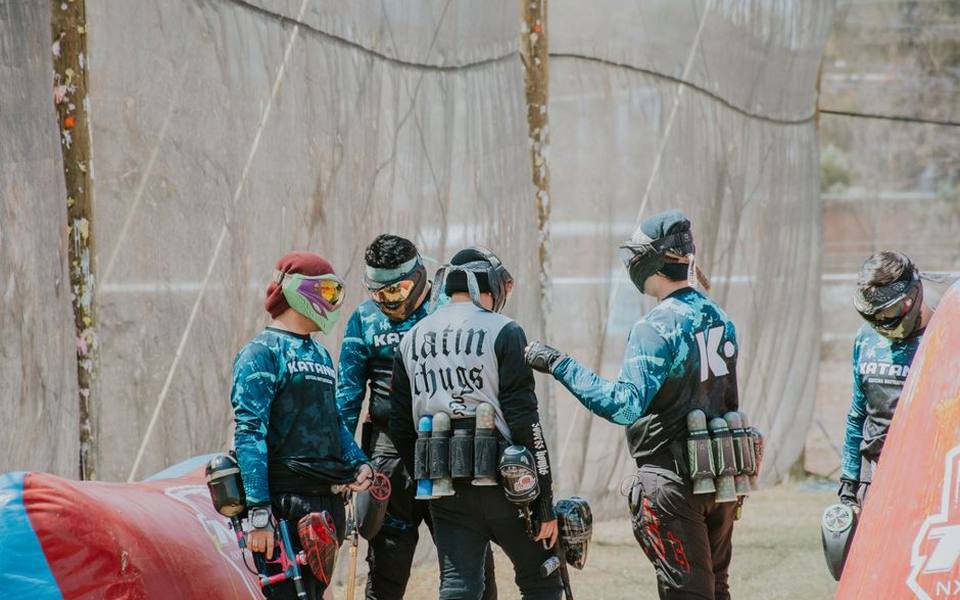
Success on the paintball field relies far more on sound spatial positioning and clear communication than on individual shooting accuracy. The single most common mistake among novice players is tunnel vision—locking eyes onto a single bunker directly ahead while ignoring flanking routes. Effective paintball tactics depend on establishing crossfire angles. When two teammates separate and aim inward at an opposing bunker from different trajectories, the opponent can no longer stay safely concealed behind their cover.
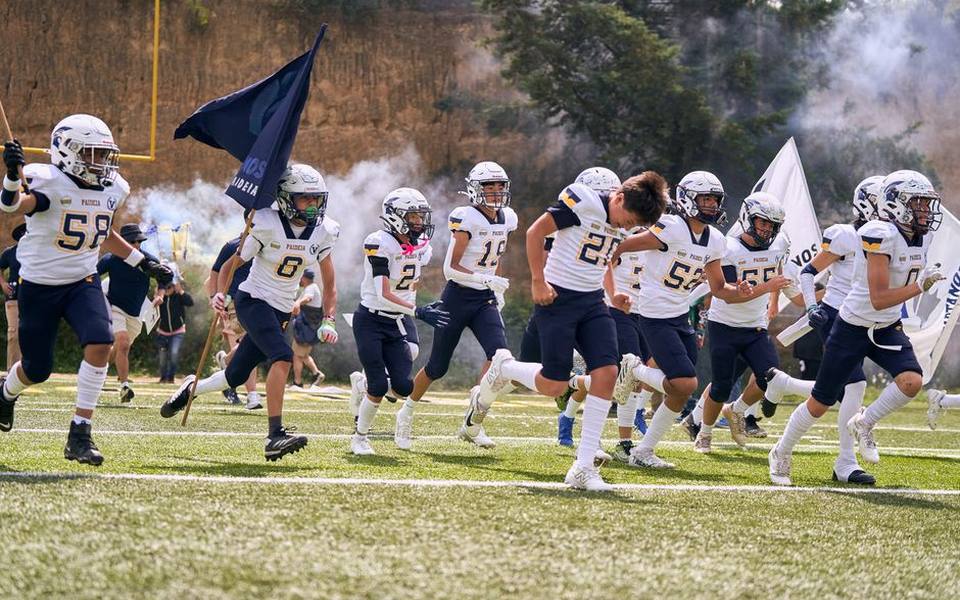
Leapfrogging, or bounding overwatch, represents the core movement doctrine for advancing across an active field. Under this method, one player maintains suppressive fire along an enemy lane while their partner dashes forward to the next secure bunker. Once established, the forward player turns their marker toward the threat, allowing the trailing teammate to move up in turn. Sprinting between cover should always be deliberate and brief, typically taking no longer than three to four seconds to minimize exposure to defensive lines.
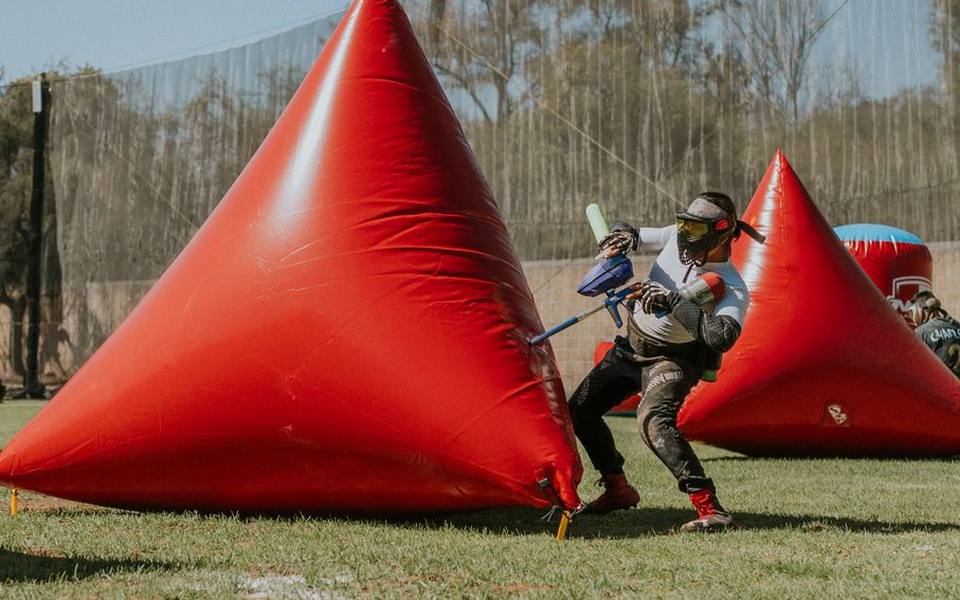
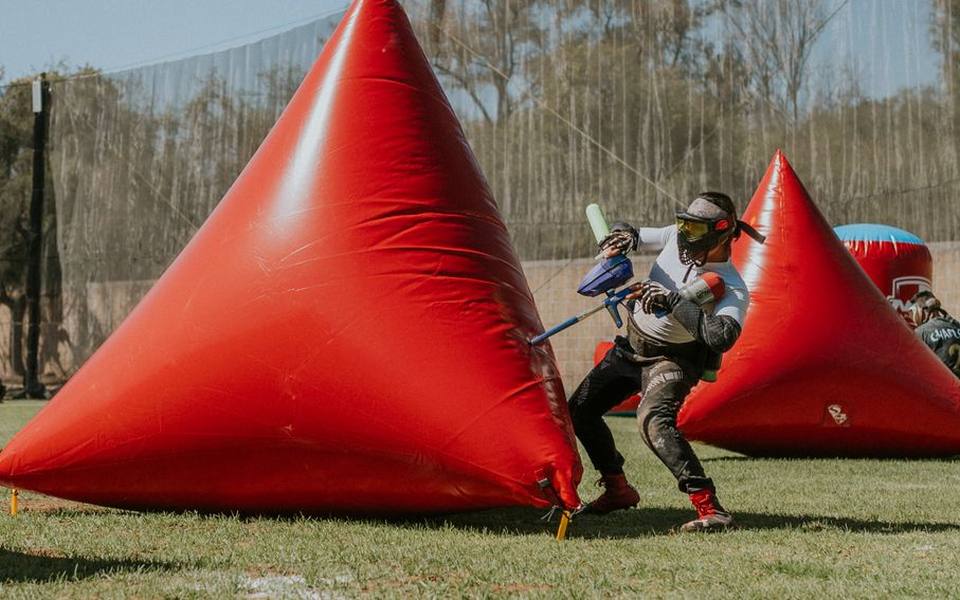
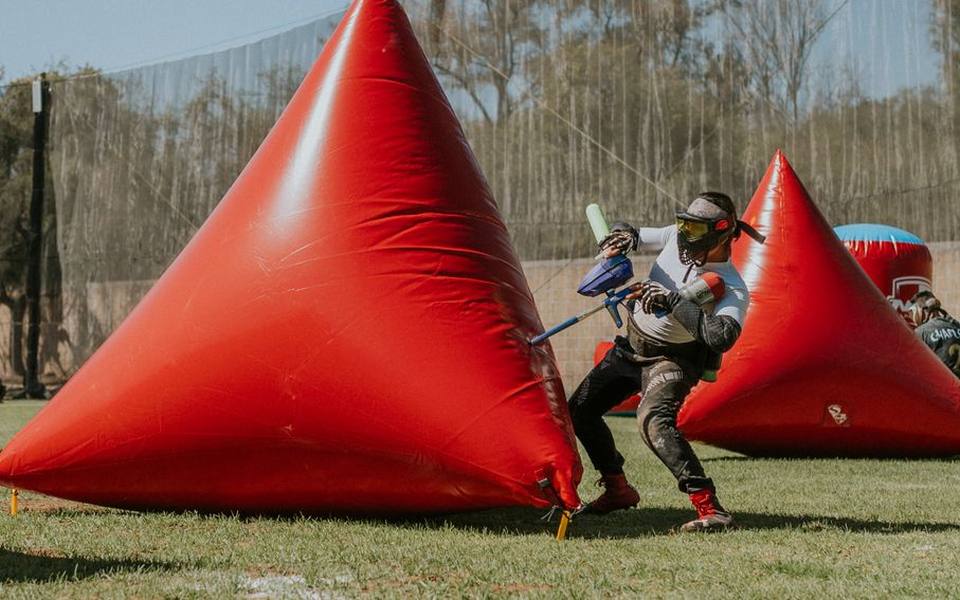
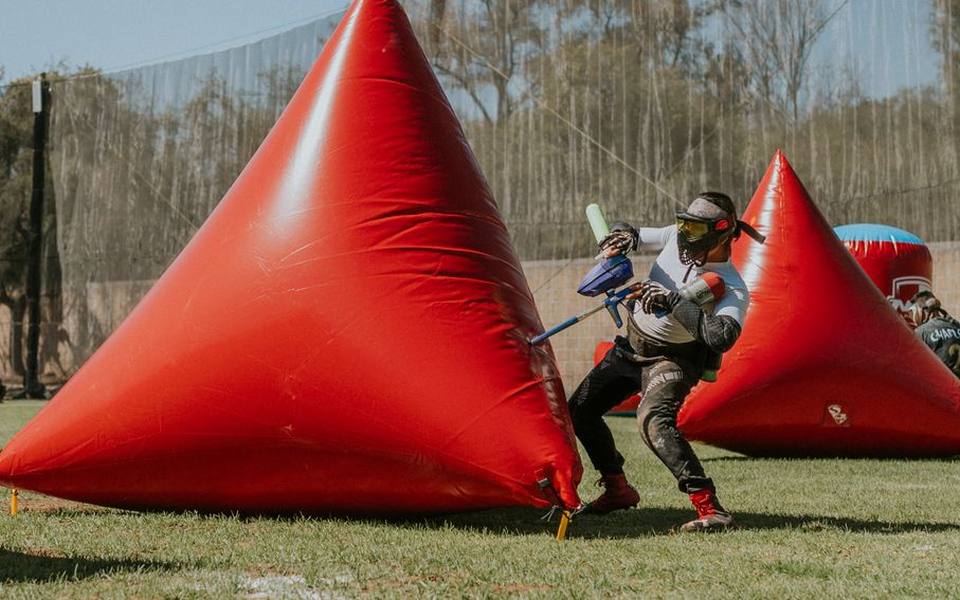
Proper bunker posture, commonly referred to as snap-shooting, allows a player to assess the field and release a rapid volley without exposing their torso. Good players keep their elbows tucked, rest the marker tank against their shoulder, and lean smoothly outward around the side of cover rather than peeking over the top. Peeking over the crest of a bunker presents the player's head and neck as an easy silhouette against the skyline, whereas rolling outward at waist level keeps the profile compact and difficult to hit.
Coordinating Objective Scenarios and Capture the Flag
While simple team elimination matches are easy to organize, objective-based scenarios like Capture the Flag (CTF) deliver the greatest value for group strategy and corporate leadership exercises. CTF formats force teams to divide resources between defensive perimeter security, scouting, and rapid offensive strike squads. Eliminating opponents is no longer the sole path to victory; instead, teams must create lane control that allows a designated flag runner to secure the target and return safely to base.
Center-flag push, often called center-flag pull, is particularly well-suited for private groups. Rather than defending two opposing flags at deep home bases, both squads fight to retrieve a single neutral flag suspended in the center of the field and deliver it to the opposing end zone. This dynamic eliminates passive camping behind back bunkers and forces both teams forward into active tactical friction, making matches faster, more decisive, and far more exciting for spectators watching from behind safety netting.
Venues that maintain multi-acre tactical layouts often draw inspiration from scenario play seen at fields that also host airsoft games. These formats incorporate timed bomb-defusal props, VIP escort missions, or simulated base defense using digital countdown clocks. Integrating clear objective criteria gives every player a defined role, allowing analytical team members who may not be the fastest runners to contribute critically through navigation, timing, and defensive containment.
Managing Mixed Skill Levels and Safety Standards
Balancing a private group that includes both aggressive seasoned players and timid first-timers requires clear boundary setting before the first ball is fired. Experienced players using custom electronic markers can easily overwhelm casual rental players through sheer rate of fire. Commercial parks solve this problem by enforcing semi-automatic firing modes, capping trigger speeds, or requiring private groups to play exclusively with standard mechanical rental markers to ensure absolute mechanical equality across the board.
Strict chronograph checks are mandatory at all reputable fields to prevent dangerous muzzle velocities. Markers are typically tested against a radar sensor before games, with maximum speeds capped between 260 and 280 feet per second. In most states, outdoor fields permit up to 280 or 300 fps depending on insurance guidelines, while indoor arenas maintain lower limits around 240 to 250 fps. Ensuring consistent velocities keeps bruising to a minimum and guarantees that protective goggle lenses perform within their engineered safety thresholds.
Field marshals also enforce surrender rules, often referred to as the mercy rule or the ten-foot rule, depending on park policy. When a player sneaks within close range of an unsuspecting opponent, they are encouraged or required to offer a verbal surrender rather than shooting at point-blank range. Clear enforcement of this rule prevents painful close-quarters impacts, maintains high morale, and fosters a respectful, positive atmosphere throughout corporate outings and casual weekend matches.
Weather Contingencies and Indoor Field Considerations
Inclement weather is the most frequent disrupter of outdoor group bookings. Rain turns woodland dirt into slick mud, fogging lenses and slowing down tactical movement, while freezing temperatures can cause gelatin paintball shells to become brittle and burst inside markers. High summer heat introduces equal hazards, particularly dehydration and heat exhaustion when participants run under thick protective layers. Organizers planning outdoor events must always establish a clear bad-weather policy with venue management regarding rescheduling deposits.
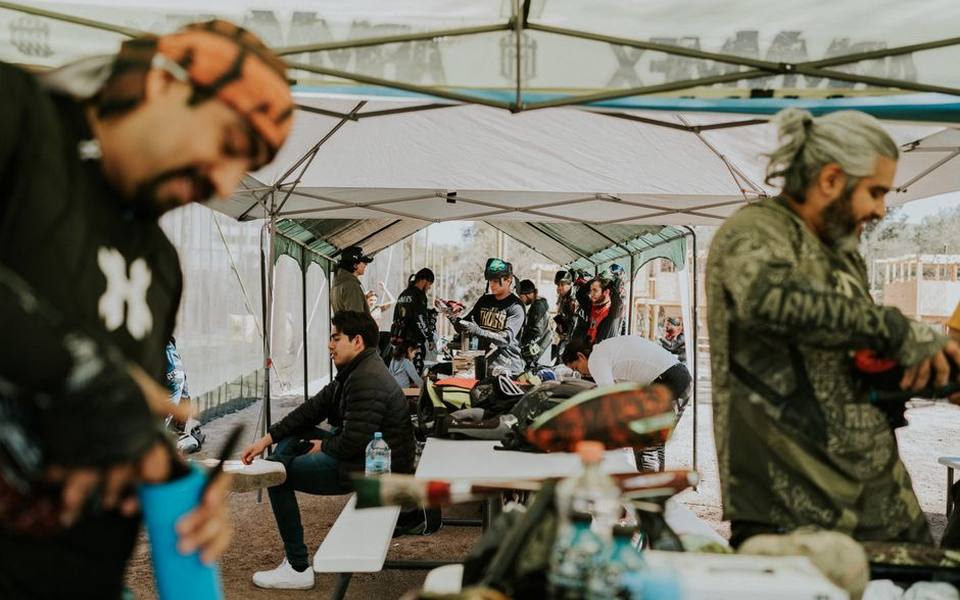
For corporate outings with non-negotiable dates, booking an indoor field provides complete immunity from weather disruptions. Indoor facilities feature climate-controlled staging zones, predictable lighting, and padded artificial turf surfaces that allow fast movement without dirt or mud. Because temperatures remain constant, paintballs fly truer and players experience far less lens fogging, which dramatically improves both safety and overall enjoyment for less experienced corporate groups.
However, playing indoors does involve tactical differences that event planners should consider. Noise levels inside commercial warehouse arenas are considerably higher due to acoustic echo off metal walls, making verbal team commands harder to hear over marker fire. Indoor layouts are also typically more compact, meaning game rounds resolve much faster. A successful indoor event schedule usually features dozens of rapid three-to-five-minute rounds with frequent hydration breaks in the air-conditioned staging lounge.
Event Planning Checklist and Booking Logistics
A flawless group event starts with an accurate participant headcount submitted at least two weeks before the game date. Most parks require a per-person deposit or a flat private field fee to reserve dedicated referees and equipment bundles. Underestimating your numbers can leave latecomers waiting for available rental gear, while overestimating may result in forfeited deposits. Planners should confirm rental packages that include a dual-pane anti-fog mask, full-tank compressed air fills, and a baseline allotment of paintballs.
Budgeting for paint consumption is essential to avoid unexpected checkout charges. A casual recreational player shooting a standard semi-automatic mechanical marker typically uses between 200 and 500 paintballs per hour. For a half-day private session lasting roughly three hours, event coordinators should plan for a case of 2,000 paintballs for every four participants. Buying paint by the case in bulk through the venue is almost always significantly cheaper than purchasing individual 500-round bags at the counter on game day.
Finally, organizers should use comprehensive directories like the PaintballAtlas field finder to cross-reference customer reviews, staging photos, and amenities across your region before placing a deposit. Selecting a facility with positive ratings for staff professionalism, clean rental goggles, and organized refereeing guarantees your team building or birthday outing runs smoothly from arrival to final post-game photos.
Published 2026-09-21 · reviewed with each rebuild, last October 2026.
Find paintball fields & fun centers near you
The directory lists 36,923 paintball fields & fun centers by state and city — pick your state or use the “Near me” button in the header.
More guides
-
 Service
Where and How to Refill Paintball CO2 and HPA Tanks
-
 Buying
A Guide to Purchasing Your Own Paintball Equipment
-
 Safety
Paintball vs Airsoft: Evaluating Impact, Costs, and Removing Stubborn Stains
-
 Money
MoneyHow Much Does Paintball Cost? Field Fees, Rental Packages, and Ammo Math
-
 Safety
Does Paintball Hurt? Safety, Bruises, Clothing, and Stains
-
 Buying
Where to Sell Used Paintball Guns Safely and Clean Up Gear
-
 Safety
Beginner's Guide to Paintball: Understanding Game Formats and Rules
-
 Money
MoneyPaintball Cost Guide: Equipment, Field Fees, and Play Prices
-
 Owning
How to Remove Paint and Acrylic Stains from Clothing and Fabrics
-
 Buying
Tactical and Military Boots: Brands, Comfort, and Field Selection
-
 Service
Corporate Team Building and Outdoor Adventure Events: The Complete Organizer's Guide
-
 Buying
Laser Tag Arenas, Equipment, and Home Party Rentals Guide
-
 Safety
LiPo Battery Maintenance, Safe Charging, and Balance Chargers for Gear
-
 Service
Indoor and Outdoor Paintball Fields: Venue Selection, Booking, and Rules
-
 Buying
Complete Paintball Equipment Guide: Markers, Air Tanks, Jerseys, and Field Attire
-
 Safety
Whitewater Rafting and River Adventure Parks: Destinations, Trips, and Safety Guide
-
 Safety
Airsoft Fields and Arenas Guide: Indoor vs Outdoor Venues, Rules, and Rentals
-
 Buying
Laser Tag Centers, Home Equipment, and Event Planning Complete Guide
-
 Service
Paintball Fields, Scenario Games, Night Ops, and Arena Booking Guide
-
 Safety
Ziplining and Aerial Trekking Parks: Top Courses, Safety Standards, and Booking
-
 Buying
Tactical Combat Boots Buying Guide: Military Specs, Fit, and Durability
-
 Owning
Paintball Marker Maintenance, Air Systems, and Tank Safety Guide
-
 Safety
What to Wear for Paintball: Clothing, Protective Gear, and Cleaning Paint Stains
-
 Owning
Airsoft Gear and Milsim Accessories: Speedloaders, Tracers, and Camouflage
-
 Safety
Complete Guide to LiPo and RC Battery Chargers: Safety, Storage, and Voltage Care
-
 Owning
Paintball Video Games, Consoles, and Digital Arenas: An Off-Field Player Guide
-
 Service
CO2 Tank Refills and Compressed Air Systems: Options, Locations, and Safety Rules
-
 Owning
Archery Games Guide: Online Simulators to Adult Field Events
-
 Buying
Complete Airsoft Guns and Equipment Guide: Reviews, Rentals, and Legal Safety
-
 Owning
Paintball Gear & Maintenance Guide: Custom Apparel, Tank Fills, and Stain Removal
-
 Service
Ultimate Guide to Indoor Soccer Zones: Leagues, Facilities, and Play Options