How Modern Laser Tag Arenas Operate
A standard session at an indoor laser tag arena typically begins with a brief staging period where players receive their equipment assignment and review basic arena rules. Players step into a vesting room where overhead racks hold specialized sensor vests wired directly to handheld phasers. Arena marshals guide the group through scoring rules, sensor locations, and safety guidelines before opening the doors into the play area. Most matches run between ten and twenty minutes of continuous action depending on the venue format.
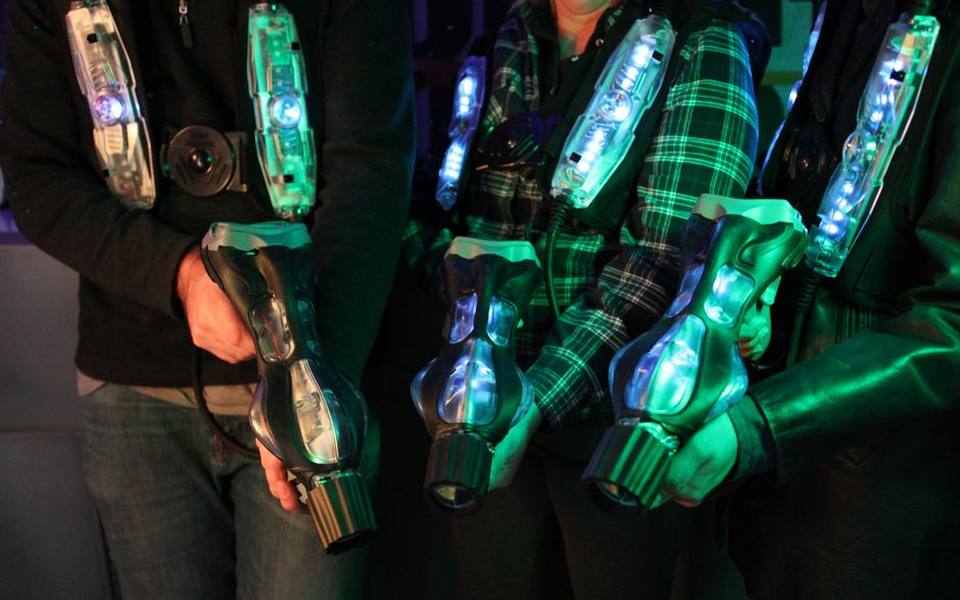
Inside the arena, ambient lighting is replaced by ultraviolet blacklights, atmospheric haze, and directional sound effects designed to disorient players and highlight neon obstacles. Sensors mounted on the chest, back, shoulders, and phaser barrel register incoming beams and vibrate to signal a confirmed hit. In contemporary scoring systems, players rarely get eliminated permanently; instead, a tag causes a brief deactivation window of three to five seconds before the phaser reactivates automatically.
Real-time scoring feeds update continuously on digital scoreboards mounted both inside the arena and out in the spectator lobby. Players receive individual code names linked to their vest number, tracking overall accuracy, total points scored, and hits taken throughout the round. When the round concludes, groups exit into the staging room to return gear and review detailed printed or digital score sheets showing team standings and performance stats.
Classic Multi-Level Layouts and Heritage Arena Styles
Traditional multi-level facilities—often modeled on the legacy Ultrazone style of arena architecture—focus heavily on verticality, geometric ramps, and strategic vantage points. These complexes feature suspended catwalks, elevated towers, and central command bases that reward teams for controlling elevated terrain. The open-sightline design allows long-range tagging across multiple tiers while maintaining tight, maze-like corridors beneath the ramps for close-quarters engagement.
Fog distribution is an essential operational element in these heritage arenas because optical sensors depend on atmospheric particles to make light beams visible. Heavy glycol or water-based fog fluid is pumped through overhead distribution ducts, creating dense layers of mist that catch the colored emitter lines. In these environments, players learn to shoot along defensive corridors while using glowing structural pillars and waist-high barricades as reactive cover against opponents perched on upper catwalks.
Base stations, often called recharge towers or energizers, serve as primary objective targets in team-oriented match modes. Destroying an opposing team base typically requires sustained fire while dodging automated counter-measures and defending against ambushes from neighboring ramps. This layout style provides distinct tactical depth compared to single-floor mazes, making it popular for competitive leagues and corporate team challenges seeking structured gameplay beyond simple free-for-all matches.
Family Entertainment Centers and Multi-Activity Venues
Many players encounter the game inside large multi-activity entertainment centers, such as Main Event facilities or regional bowling and arcade complexes. In these broad entertainment hubs, laser tag functions as one piece of a broader entertainment package rather than a standalone attraction. The arenas tend to feature modular wall panels, themed sci-fi murals, and straightforward single- or double-level configurations optimized for rapid player turnover between arcade sessions and food service.
Operational pacing at family entertainment centers focuses heavily on accessibility and family-friendly gameplay rather than intense tactical competition. Sessions typically feature simple team-versus-team formats or open free-for-all rounds where hit penalties are gentle and respawn periods are short. Because the customer base includes young children alongside adults, arenas avoid pitch-black corners and maintain wide walkways to prevent accidental collisions during high-energy exchanges.
Choosing between an independent dedicated facility and a multi-activity complex depends largely on your party goals. Large entertainment chains provide seamless transitions between bowling alleys, arcade floors, and dining spaces, which simplifies logistical planning for casual gatherings. However, specialized standalone arenas often invest more heavily in custom audio hardware, advanced base objectives, and varied mission modes that appeal to dedicated tactical enthusiasts.
Understanding the Gear: Phasers, Vests, and Sensors
Professional commercial laser tag equipment relies on infrared light technology paired with visible aiming lasers to register hits accurately. When a player pulls the trigger on a phaser, the emitter releases a coded infrared pulse that carries a unique digital signature corresponding to that player. High-sensitivity photodiode sensors positioned across the vest decode the incoming signal in milliseconds, ensuring that friendly fire is filtered out and scoring data logs accurately.
Commercial phasers are engineered for severe industrial wear, utilizing durable polycarbonate housings, rubber bumper guards, and two-handed safety sensors. Many commercial systems mandate that players keep both hands on the unit to discharge a shot, preventing reckless one-handed swinging around corners. Internal speakers within the phaser provide audio cues for remaining ammunition, shield status, and incoming fire warnings, allowing participants to track their condition without constantly checking external displays.
Commercial vest harnesses differ significantly from consumer toys, carrying heavy-duty battery packs, radio frequency transceivers, and illuminated shoulder domes. These vests communicate wirelessly with a central server that synchronizes game clocks, handles base interactions, and logs live scores. A well-maintained vest assembly can withstand hundreds of games per week, provided the venue staff inspects wiring looms, cleans sweat-wicking neoprene harnesses, and tests sensor sensitivity during daily opening checks.
Home Sets and Backyard Party Equipment
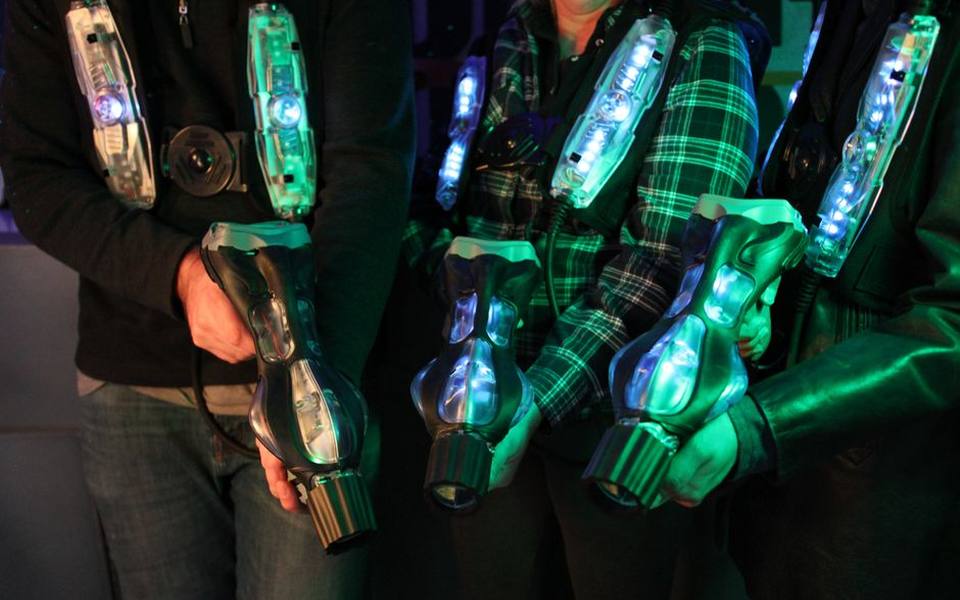
Consumer laser tag sets designed for home use have improved significantly, offering families an accessible way to play in backyards, basements, and community parks. These retail packages typically feature lightweight handheld units that house both the emitter and the primary target sensors directly on the front barrel. Eliminating the need for separate torso vests keeps costs manageable and allows young children to put on equipment without complicated harness adjustments.
Direct sunlight presents the single largest obstacle when using entry-level consumer gear outdoors. Natural daylight contains intense infrared radiation that can flood budget optical sensors, either causing phantom hits or severely shortening the functional operational range down to just a few feet. Higher-end consumer sets counter this by using stronger emitter lenses and shaded sensor hoods, allowing reliable daytime play up to thirty or fifty feet across open yards.
Managing power supply is critical when organizing neighborhood home games or renting portable setups for private parties. Most consumer units draw substantial power to drive sound cards, vibrational motors, and bright indicator LEDs, quickly draining standard disposable cells. Investing in high-capacity rechargeable batteries or renting commercial-grade mobile packages with integrated lithium battery docks ensures that matches do not stop midway through an afternoon celebration.
Tactical Scenarios Compared to Other Combat Sports
Tactical laser tag bridges the gap between traditional arcade arenas and projectile combat sports like paintball. These advanced platforms abandon neon vests in favor of realistic equipment profiles, red-dot sights, and head-mounted sensor headbands. Matches often run outdoors across rugged terrain or within urban simulation compounds, emphasizing real-world tactical movement, controlled squad communication, and finite ammunition counts rather than continuous trigger spamming.
For groups that enjoy the physical intensity of tactical shooting without the mess or sting of paintballs, tactical setups provide an ideal stepping stone. Many modern venues operate hybrid properties where visitors can also explore airsoft games on-site to experience different levels of ballistic realism. The digital nature of tactical tags means players cannot dispute hits, as the head sensors lock down the participant's phaser instantly upon simulated elimination.
Outdoor scenarios introduce unpredictable variables including variable shadows, dense foliage, and wide elevation changes that demand genuine fieldcraft. Teams must maneuver along natural drainage lines and tree lines to establish crossfire angles across distances exceeding one hundred yards. While traditional arenas prioritize reflex speed and rapid close-range tagging, outdoor tactical operations reward Patience, cover discipline, and synchronized team maneuvers.
Planning Group Outings and Birthday Events
Organizing an event at dedicated laser tag places requires balancing player age groups, party duration, and private arena access. During open public sessions, walk-in groups share the playing floor with strangers of mixed ages and skill levels, which can occasionally lead to mismatched gameplay. Booking a private rental ensures that your group controls the arena exclusively, enabling custom match rules, tailored handicap scoring, and synchronized game starts.
Most party coordinators look for comprehensive packages that combine arena time with private celebration rooms and dedicated staff hosts. If your group is considering a broader range of tactical activities, exploring party packages across different shooting venues can help you compare what amenities are included, such as setup assistance, food storage, and cleanup. Having a private room gives participants a quiet place to catch their breath between physical rounds.
Timing and scheduling are essential components of a smooth group outing, particularly on busy weekends. Arenas generally recommend that all participants arrive at least twenty minutes prior to the first scheduled game to handle digital safety waivers and staging briefings. Groups that arrive late risk losing one of their paid sessions because arenas operate on tightly scheduled computerized queue systems that cannot delay following bookings.
Finding Venues Across Southern California and San Diego
Players looking for laser tag in San Diego and the surrounding coastal counties will find a diverse mix of family fun centers and tactical combat setups. The region features several multi-attraction complexes that pair laser arenas with indoor ropes courses, mini-golf, and arcade lounges, catering to tourists and local youth leagues alike. Meanwhile, coastal military culture has spurred interest in high-tech tactical setups that focus on realistic room clearing.
Year-round mild weather across the region also supports mobile laser tag operators who bring inflatable bunkers, pop-up barriers, and commercial phasers directly to public parks or private estates. These rental companies set up structured games for school fundraisers, neighborhood block parties, and youth sports banquets. Checking local park authority guidelines is important when planning an outdoor public gathering, as some parks require permits for commercial event equipment.
Navigating options throughout the broader Southern California market is easier when comparing venue infrastructure and field amenities. Looking through independent directories covering paintball fields in California can reveal multi-sport facilities that run both laser and projectile sports on the same grounds. These expansive venues often provide larger footprints than conventional strip-mall entertainment centers.
Exploring Arenas in the Chicago Metro Area
In the Midwest, severe winter weather drives tremendous demand for climate-controlled indoor recreation throughout the colder months. Those seeking laser tag in Chicago can choose from massive suburban arenas featuring multi-story steel structures, heavy fog effects, and competitive tournament scenes. These facilities offer an energetic indoor escape when snow and freezing temperatures make outdoor team sports impractical.
Suburban centers surrounding Cook and DuPage counties often showcase classic nineties-style arena architecture updated with modern digital wireless tracking. Because space is at a premium in urban cores, many of the largest multi-level facilities are situated in the surrounding suburbs near major highway corridors. These spacious facilities easily accommodate large school groups, scouting troops, and corporate team-building retreats seeking private whole-facility buyouts.
When evaluating options in the region, check whether a facility operates purely as a laser arena or maintains hybrid spaces. Exploring resources on an indoor field or browsing local listings for paintball fields in Illinois can introduce you to converted warehouse facilities that operate specialized tactical missions alongside traditional combat sports.
Entertainment and Destination Play in Las Vegas
Finding laser tag in Vegas involves looking beyond the casino corridors to discover both local community recreation spots and massive resort-style attractions. Off-strip centers cater heavily to valley residents, offering expansive multi-tier arenas equipped with specialized interactive targets, hidden ramps, and digital base towers. These community facilities frequently host youth sports windups and local birthday celebrations away from tourist corridors.

On the resort strip, entertainment complexes integrate laser tag into expansive futuristic experience centers. These commercial installations often feature high-budget visual effects, professional theatrical lighting rigs, and custom audio tracks produced specifically for the attraction. While prices in tourist corridors tend to be higher than in suburban centers, the production value and environmental thematic detail can be exceptionally immersive.
Mobile laser tag services also see heavy demand throughout Clark County for convention entertainment, private corporate mixers, and resort pool deck events. Mobile operators transport complete inflatable bunker mazes and computer-managed phaser setups directly to hotel conference centers and residential backyards. This flexibility makes laser tag a practical activity option for corporate planners wanting interactive entertainment without logistical off-site transit.
Safety Considerations, Footwear, and Arena Etiquette
Although laser tag does not involve physical projectiles, the dark, multi-level environment requires clear attention to personal safety. The number one rule enforced across all commercial venues is a strict prohibition against running. The combination of low ultraviolet lighting, atmospheric haze, and narrow wall corners creates significant trip hazards if participants sprint recklessly through the maze.
Proper footwear is critical for navigating ramp inclines and slick painted arena floors safely. Closed-toe athletic shoes with slip-resistant rubber outsoles are universally required by arena staff; open-toed sandals, flip-flops, crocs, and elevated heels are routinely barred at the staging door. Wearing dark or muted clothing helps you stay concealed in blacklight environments, whereas white shirts and bright neon socks glow intensely under UV tubes, making you an easy target.
Physical contact between players is strictly forbidden in commercial arenas. Etiquette demands maintaining at least a three-to-five-foot buffer between yourself and other participants, avoiding aggressive corner camping, and never covering vest sensors with hands or apparel. Observing these basic behavioral standards ensures that participants of all ages and physical sizes can enjoy a safe, competitive, and exhilarating session.
Published 2026-09-21 · reviewed with each rebuild, last October 2026.
Find paintball fields & fun centers near you
The directory lists 36,923 paintball fields & fun centers by state and city — pick your state or use the “Near me” button in the header.
More guides
-
 Service
Where and How to Refill Paintball CO2 and HPA Tanks
-
 Buying
A Guide to Purchasing Your Own Paintball Equipment
-
 Safety
Paintball vs Airsoft: Evaluating Impact, Costs, and Removing Stubborn Stains
-
 Money
MoneyHow Much Does Paintball Cost? Field Fees, Rental Packages, and Ammo Math
-
 Safety
Does Paintball Hurt? Safety, Bruises, Clothing, and Stains
-
 Buying
Where to Sell Used Paintball Guns Safely and Clean Up Gear
-
 Safety
Beginner's Guide to Paintball: Understanding Game Formats and Rules
-
 Money
MoneyPaintball Cost Guide: Equipment, Field Fees, and Play Prices
-
 Owning
How to Remove Paint and Acrylic Stains from Clothing and Fabrics
-
 Buying
Tactical and Military Boots: Brands, Comfort, and Field Selection
-
 Service
Corporate Team Building and Outdoor Adventure Events: The Complete Organizer's Guide
-
 Safety
LiPo Battery Maintenance, Safe Charging, and Balance Chargers for Gear
-
 Service
Indoor and Outdoor Paintball Fields: Venue Selection, Booking, and Rules
-
 Buying
Complete Paintball Equipment Guide: Markers, Air Tanks, Jerseys, and Field Attire
-
 Safety
Whitewater Rafting and River Adventure Parks: Destinations, Trips, and Safety Guide
-
 Safety
Airsoft Fields and Arenas Guide: Indoor vs Outdoor Venues, Rules, and Rentals
-
 Buying
Laser Tag Centers, Home Equipment, and Event Planning Complete Guide
-
 Service
Paintball Fields, Scenario Games, Night Ops, and Arena Booking Guide
-
 Safety
Ziplining and Aerial Trekking Parks: Top Courses, Safety Standards, and Booking
-
 Buying
Tactical Combat Boots Buying Guide: Military Specs, Fit, and Durability
-
 Owning
Paintball Marker Maintenance, Air Systems, and Tank Safety Guide
-
 Safety
What to Wear for Paintball: Clothing, Protective Gear, and Cleaning Paint Stains
-
 Owning
Airsoft Gear and Milsim Accessories: Speedloaders, Tracers, and Camouflage
-
 Safety
Paintball Age Limits, Tactics, and Corporate Event Planning
-
 Safety
Complete Guide to LiPo and RC Battery Chargers: Safety, Storage, and Voltage Care
-
 Owning
Paintball Video Games, Consoles, and Digital Arenas: An Off-Field Player Guide
-
 Service
CO2 Tank Refills and Compressed Air Systems: Options, Locations, and Safety Rules
-
 Owning
Archery Games Guide: Online Simulators to Adult Field Events
-
 Buying
Complete Airsoft Guns and Equipment Guide: Reviews, Rentals, and Legal Safety
-
 Owning
Paintball Gear & Maintenance Guide: Custom Apparel, Tank Fills, and Stain Removal
-
 Service
Ultimate Guide to Indoor Soccer Zones: Leagues, Facilities, and Play Options